
By Nick Italiano

Over the years my woods kit has changed significantly; this is a regular occurrence as improvements in skill set, experiences, mistakes, and equipment innovations all play an essential role in shaping the things I carry along on my adventures. As is the case with most people, my early woods adventures occurred with very little gear, and I quickly learned that lack of equipment and skill led to many unpleasant experiences. Like many, I overcompensated by obtaining a ton of equipment to ensure I could avoid those unpleasant and sometimes dangerous scenarios. This was a very expensive and heavy way to go about things, while I didn’t weigh in at the time, I can imagine that pack weighed 50-plus pounds!
As time passed, I learned new skills, identified useless or redundant gear, and slowly began shrinking down my kit. Today my standard kit fits inside a small shoulder carry bag. The kit is lightweight, saving my aging body from having to expend unnecessary energy and strain my muscles. Everything inside my kit is dialed-in to cover all my bases, and I can rely on my skill set to make up any gaps. My Equipment is easily accessible without having to take the bag off my body, an advantage when timely access to gear while on the move is essential.
Let’s dive deeper into the contents of the kit, hopefully, it will give you some insight as to what some essential pieces of gear are and why they are important. Also, understand that this is designed to be a minimalist kit that is greatly supplemented by experience and skills learned over a lifetime; understandably, each person will have a different skill set, environmental considerations, and personal needs that may make their kit larger or even smaller than this one.
The Bag
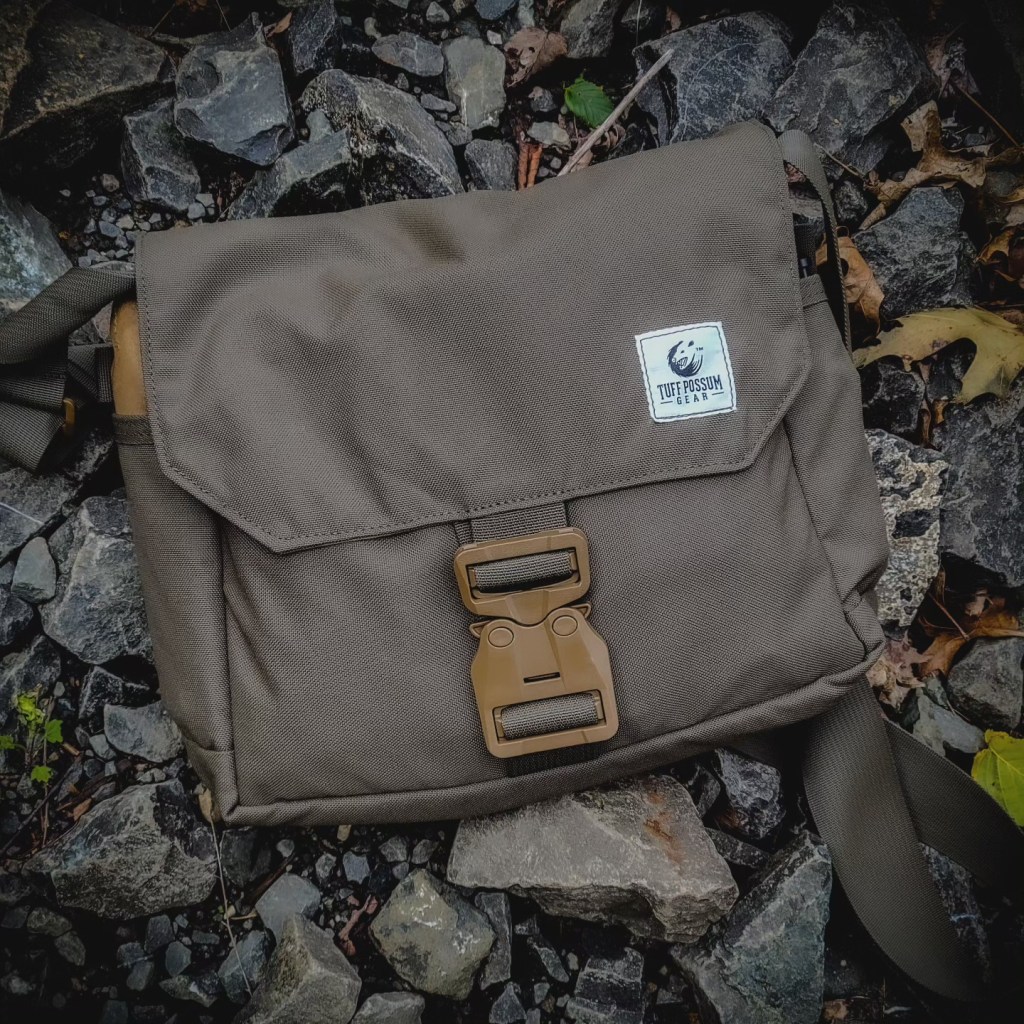
To carry everything I am using the Tuff Possum Shackleton EDC Satchel, I recently did a write-up for this bag so go check this article for a detailed look at it. Why a satchel? For simplicity and ease of access. I have found that we are not good about having a lot of extra room in our bags, we find ways to fill the space. Adding more gear means adding more weight, adding more weight slows us down and puts strain on our bodies; if this can be avoided it should be, especially if we are planning to move across a significant distance. Another advantage to satchels is the ability to access your equipment without taking off the bag. This provides a key benefit, gear can be quickly accessed on the move or in high-stress scenarios. While in many cases it is a simple quality of life benefit like being able to grab your water bottle easily, I can think of a few occasions where I was very happy to be able to quickly grab my bear spray!
Utility Tools
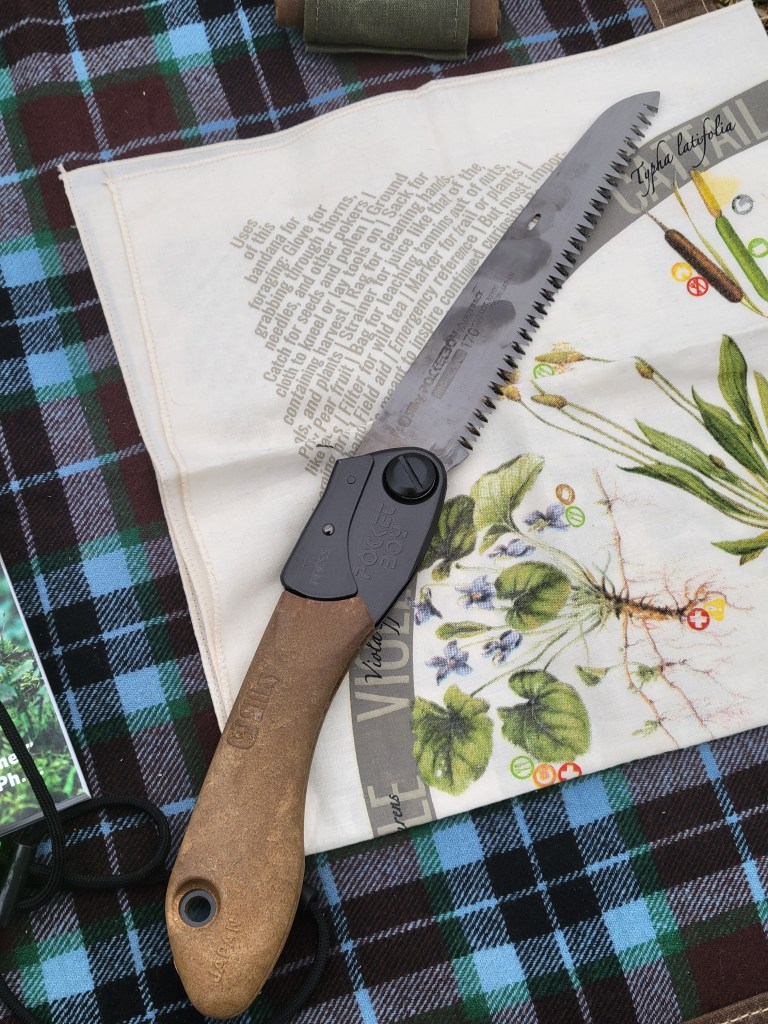
I keep my tool kit pretty light because I keep most of my essentials on my body, such as a knife, multi-tool, and flashlight. Two tools that I do keep in my bag are a folding saw and a Swiss Army Knife.
Silky Pocket Boy Folding Saw: A folding saw is an important tool that helps process wood and can be beneficial when foraging. As my friend Reuben Bolieu pointed out when he joined us on the Raise the Flag Podcast, a saw also provides a viable way to warm you up in the cold! Not only does it help you process wood for a fire, but the action of sawing is a whole-body process that will have you sweating in no time!
Swiss Army Knife: The tried and true Swiss Army Knife is so much more than a cutting tool, each model has a variety of other tools to utilize in the wilderness, such as a scissor, small saw, awl, screwdrivers, and many more. It is hard to beat the utility a Swiss Army Knife provides in a compact easy to carry package
Soft Goods

Soft goods are valuable as they tend to be lightweight and serve multiple purposes. I carry a few pouches to keep gear organized, a bandana, leather gloves, and a ground cloth.
Wazoo Gear Foraging Bandana: Wazoo includes this in their Functional Fabric line for a very good reason, it is a versatile multi-tool! The bandana can be used to cover your head or face, pre-filter water, or as a make-shift storage bag. The Wazoo Foraging Bandana also includes some valuable information to help you identify and utilize common edible and medicinal plants. This information is great as a quick reference in an emergency for those who are unfamiliar with any edible plants or as a valuable learning and teaching tool for those with more experience.
PNWBUSHCRAFT Jr. Ground Cloth: I like a small ground cloth, while it is not a necessity, it is nice to keep yourself dry and warm when sitting or kneeling on cold or wet ground. The PNWBUSHCRAFT Jr. Ground cloth also makes a great staging area for your gear if you are working in the woods keeping everything in one place will help prevent the misplacement of gear and the rugged waxed canvas will keep sensitive equipment dry when working on damp ground.
Give’r Gloves: Your hands are a valuable resource that needs protection, a good pair of gloves go a long way to ensuring that goal! Leather gloves can help shield your hands from the elements, protect your skin from toxic plants while foraging, provide some resistance to heat while working with fire, and reduce the potential for injuries while working with sharp tools.
Medical Kit

ITS Tactical Med Pouch with Active Carry Technologies Components: Medical gear is always a challenging topic, and we talk about it extensively in a podcast episode with Shane Adams of ESEE Knives/Randall’s Adventure Training and a follow-up episode shortly thereafter. In a nutshell, most people carry too much medical gear or none at all; finding the sweet spot that fits your skill set and needs is the challenge! My medkit focuses on bleeding and minor injuries. Severe bleeding injuries can take a person out of commission fast; but more than likely we will face minor cuts, insect bites, and minor burns. A tourniquet, some Quickclot, and gauze will cover most major bleeds, and a boo-boo kit with bandaids and assorted ointments will cover the rest. While this kit is not comprehensive, it will cover me long enough to get to an advanced kit in my car or at base camp.
Survival Kit

Tuff Possum PSK Pouch with Assorted Kit Items: This is another topic I have a full write-up on and I suggest you read up on it in this article. The important takeaway is that you have a small compact kit that can help you out in an emergency or in the event of loss or failure of your primary equipment. I also utilize this kit to store my primary fire-making tools including a ferrocerium rod, lighter, and man-made tinder.
Food, Water, and Cooking
Having the ability to access clean drinking water is a top priority in the wilderness, as a lack of water can prove dangerous or even fatal very quickly. What is expected to be a short hike can become an emergency due to getting lost or an injury; without proper access to water, dehydration and heat sickness can present a risk to your life. Food is a concern over an extended duration outdoors, more so if you are not acclimated to not eating for extended durations. I don’t typically carry food, as I can forage plants and fungi, and attempt to trap small animals if needed, but I do carry a way to cook as meat and fungi should not be consumed raw.
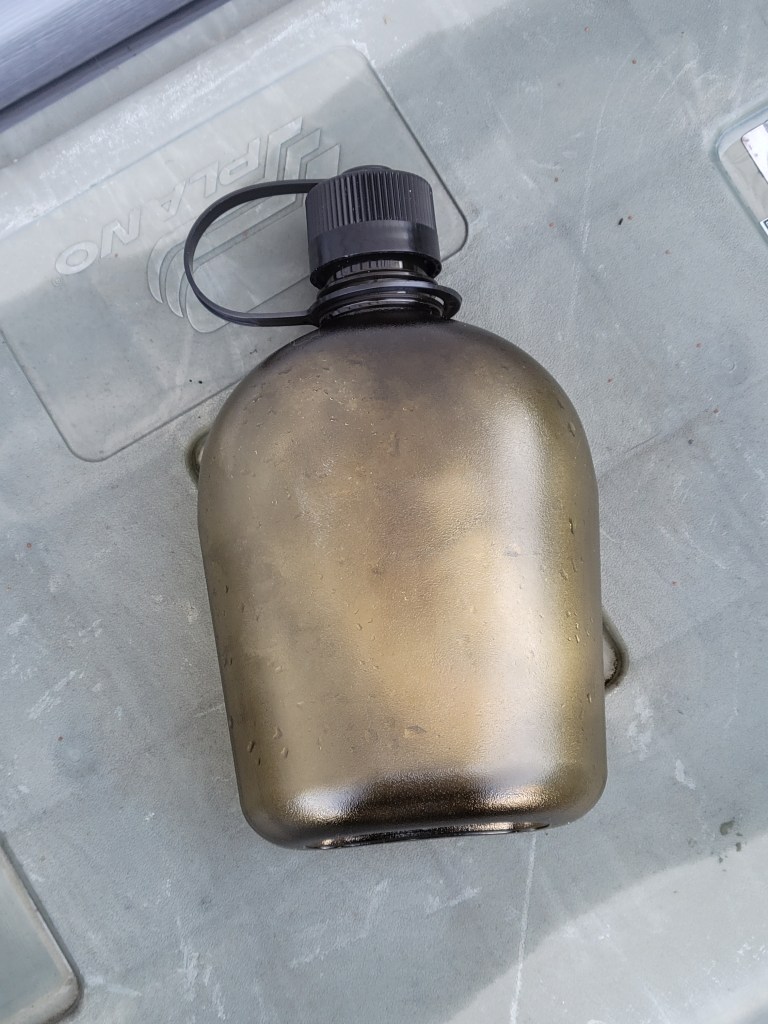
Nalgene Canteen: This is a simple and compact way to bring a liter of water with me. It is lightweight and can be refilled if needed.
Uberleben Folding Stove and Steel Cup: The Folding stove is super compact and allows me to use debris material to get a fire going for cooking or enjoyment. I keep a small steel cup in or lashed to the pack to boil water or cook in.
Chemical Purifiers: These water additives are great if you’re in a situation where you can’t boil water. Typically either chlorine or iodine-based, chemical purifier tabs will make short work of harmful organisms in water, with the side effect of making your water taste a little weird.
Liquid IV: Adding electrolytes to your water is a great way to maximize hydration and keep you going longer. Liquid IV comes in small packages that are easy to pack and tastes good. These are also a great way to cover the taste of chlorine or iodine-based chemical purifiers.
Self Defense
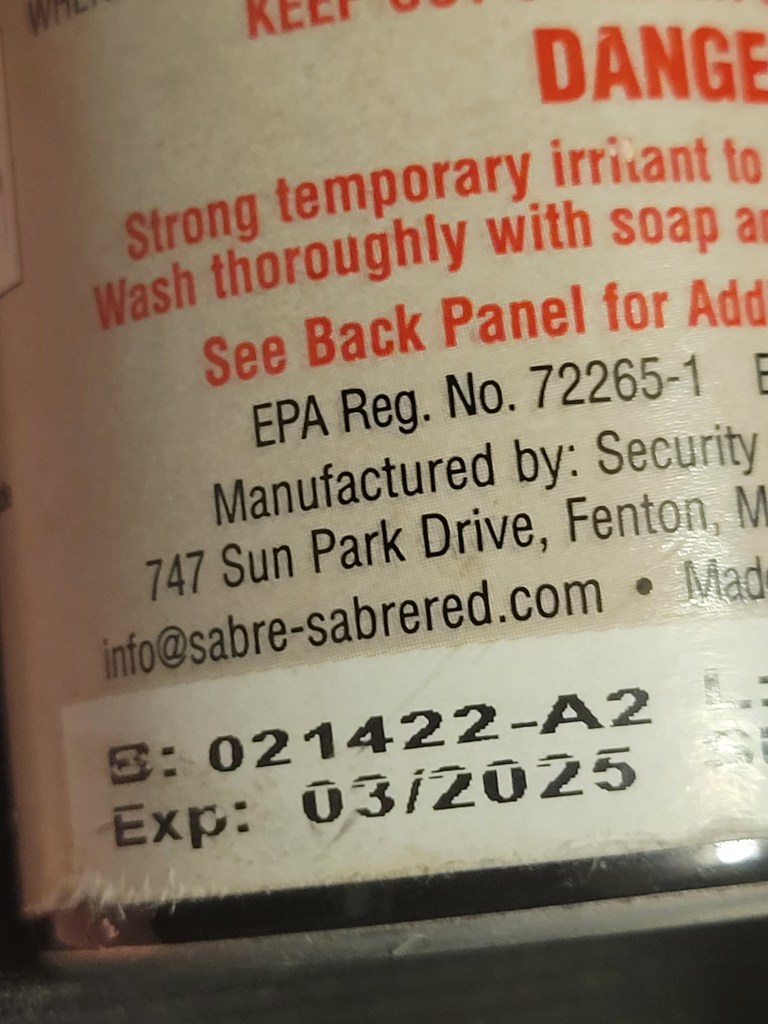
In the Wilderness, having some form of self-defense is a significant factor to consider; what you choose to carry will be dependent on your skill set, comfort level, and local laws. A self-defense situation will likely occur with an animal, but you should be aware of human threats as well.
Bear Spray: Due to local regulations, bear spray is my best option for defense in the wilderness. Bear spray acts much like pepper spray but disperses in a large cloud and will ward off bears and other dangerous predators in most cases. As with any pepper spray, you must be aware of potential blowback into your face and the finite supply in each can. It is a good idea to replace unused bear spray after it expires to ensure you have a functioning can.
When This Kit is Used

This kit is my go-to for day hiking, which makes up a majority of my outdoor activity. It is also a great option for shorter excursions during a longer camping trip where I have a dedicated base camp. While I could survive with this kit for an extended time if I had to, I would likely pack a larger bag for extended backpacking trips to include more comfort items, clothing, food, and a better water filtration system.
Keep in mind that this kit is very personalized to me, and each individual’s kit will vary. I share this to give readers an idea of what may work for them and as a challenge to begin thinking about building a more minimalist kit!
Discover more from Black Flag Survival
Subscribe to get the latest posts sent to your email.

 Black Flag Survival